Crisps Included: Why the Smallest Invitation Is the One Worth Saying Yes To
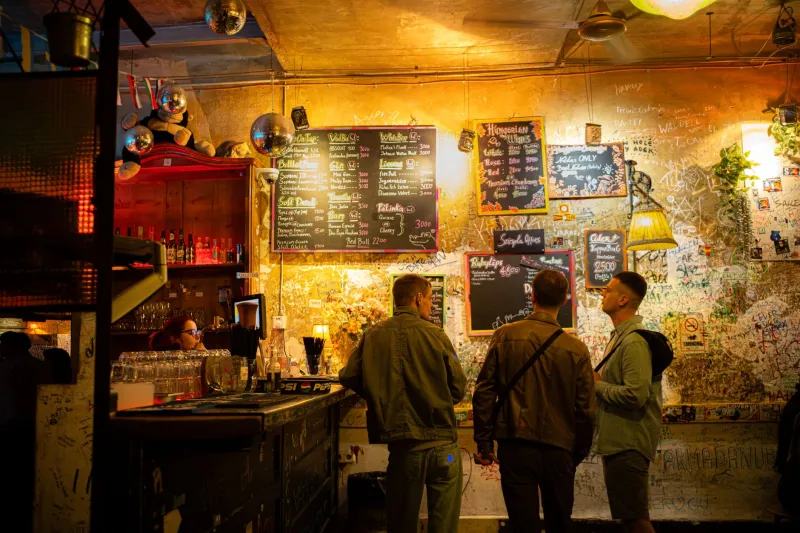
Somewhere between the third soggy Tuesday of November and the first mince pie of 2026, a small miracle happens. Someone asks you to do something low-effort. Not a wedding. Not a weekend away. Not a Big Plan requiring a spreadsheet, a babysitter and two trains. Just: 'Pub quiz Thursday? We're rubbish and need a fourth.'
And for a second, you freeze. Because saying yes to that feels oddly exposing. What if you're rubbish at the quiz? What if you have to stay out past 9pm? What if it turns into a Thing? But here's the quiet truth: the smallest invitations are often the ones that hold UK social life together. They are low-risk, low-cost and low-commitment — and they are exactly what a lot of us need in 2026.
The invitation that doesn't need an outfit
Big plans are brilliant, but they arrive with admin. A night out needs a booking, a babysitter, a train timetable and a personality. A low-stakes invitation needs a coat. That's the beauty of the pub quiz, the library talk, the Saturday dog walk, the neighbour's 'pop round for a brew'. These are not events. They are tiny doorways back into other people's lives.
They also suit the British talent for understatement. Nobody has to declare themselves lonely or desperate for company. You can just turn up, take a crisp, and let the conversation do the rest. There is something deeply civilised about a social life built from small, repeatable moments rather than one heroic blow-out every six weeks.
Why tiny yeses beat big plans
A big plan is a cliff edge. You either go or you don't, and the fall can feel long. A tiny invitation is a step. You can take it, enjoy it, and go home. You can be a bit rubbish at the quiz. You can leave after one drink. You can walk the dog and talk about the weather for 20 minutes. The stakes are so low that the pressure never gets a chance to build.
That matters because connection is rarely rebuilt through grand gestures. It grows through repetition. The same faces at the same quiz. The same neighbour waving from the same doorstep. The same library crowd shuffling into the same folding chairs. Small yeses are how you become a familiar face again.
The art of the partial yes
You do not have to say a full, gushing, all-in yes. You can say a partial yes, and honestly, it is the most useful social skill going. Here are a few scripts that keep things warm without handing over your whole week:
- 'I'm in, but I'll need to head off by nine.'
- 'Yes, but I'm not staying for the after-bit — I'm strictly a one-drink person.'
- 'I can do the first hour. I turn into a pumpkin after that.'
- 'Sounds good. I'll come along, but I'm not volunteering for anything.'
- 'Can I bring anything? I'm good for crisps and moral support.'
The partial yes is not rude. It is honest. It tells the other person you want to be there without pretending you have unlimited energy. Most people respect it, because most people are also quietly protecting their own sofa time.
Dodging the overcommitment trap
Low-stakes invitations can pile up if you are not careful. One quiz becomes a weekly team, one brew becomes a standing Sunday, one dog walk becomes a rota. That is lovely until it is not. The trick is to say yes to the invitation, not to every job attached to it.
Try a simple rule: one tiny yes a week. Not one big night out. Not one obligation. One low-stakes thing you would genuinely enjoy. Put it in your diary and treat it like a dentist appointment you actually like. If something bigger comes along, you can still say no. A full social life is not the same as a full calendar.
It also helps to reply quickly. A fast 'yes, I'm in, but only for an hour' is kinder than a three-day silence followed by a maybe. Quick, clear, low-drama. That is the language of grown-up friendship.
A seven-day tiny-yes challenge
Here is a gentle challenge for the week ahead. No big plans. No forced fun. Just one small yes at a time.
Day 1 — Monday: Say yes to one invitation that takes under 90 minutes. Quiz, coffee, walk, whatever. You are allowed to leave early.
Day 2 — Tuesday: Send one low-stakes invite of your own. 'Fancy a brew after work?' counts. So does 'I'm walking the dog at seven, want to come?'
Day 3 — Wednesday: Accept a neighbourly offer. If someone says 'pop round', pop round. Take a packet of biscuits. Stay for one cup.
Day 4 — Thursday: Check what is on at your local library or community hall. A talk, a club, a coffee morning. Go for 20 minutes if that is all you have.
Day 5 — Friday: Practise the partial yes. Say yes to the pub, no to the 11pm extension. Enjoy both decisions.
Day 6 — Saturday: Do something small and social that does not involve a booking. A parkrun, a dog walk, a browse round a market with someone else.
Day 7 — Sunday: Notice what felt good. Not what was impressive. Not what made a good photo. Just what felt easy and human.
The point is not to fill every day. It is to prove to yourself that connection does not require a huge effort. One small yes can break a week open. Two can start a habit. Three can make you a regular somewhere, which is secretly one of the best things a person can be.
The bit where you actually go
Here is the final hurdle: the bit where you put your shoes on. It is easy to talk yourself out of a low-stakes invitation because it is low-stakes. But that is exactly why it is worth going. You do not need to be on top form. You do not need a story. You just need to turn up, take a crisp, and let the evening be small.
In 2026, our calendars are full enough. What they often lack is the ordinary stuff: the quiz, the brew, the walk, the library chair. So when the next tiny invitation lands, try saying yes. Not a huge yes. Not a forever yes. Just a small, sensible, crisps-included yes. It might not sound like much. It might just rebuild your week.