Seat Back, Eyes Shut: Britain's Most Underrated Wellness Ritual Is on the 7:42
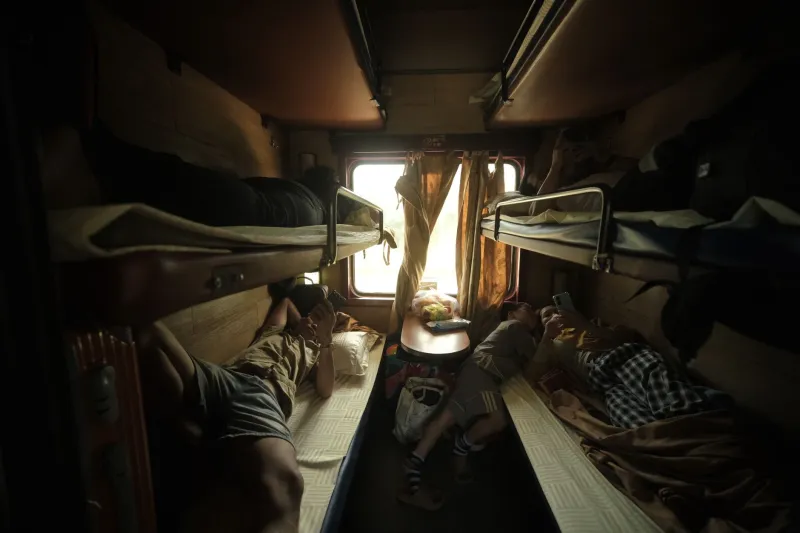
There is a particular kind of peace that descends on a train carriage somewhere between Didcot and Paddington. The trolley has done its first lap. The person opposite has finally stopped trying to open a laptop on a seat-back table. And a grown adult in a sensible coat has gently tipped their head against the window and gone somewhere else for twenty minutes.
This is not laziness. It is maintenance.
In 2026, the commute is still a strange little pressure cooker. We answer messages on platforms, join calls from vestibules, and treat a four-carriage service like a mobile office with worse chairs. The train nap is the counterweight to all that. It is a small, public act of self-preservation — and frankly, it deserves better PR.
The quiet coach is a social contract, not a bedroom
The quiet coach has never been about total silence. It is about not being the main character. You can rustle a paper. You can eat a slightly tragic flapjack. You can even fall asleep, provided you do it with a bit of awareness.
The unwritten rules are fairly simple. Headphones on, volume low enough that your podcast does not become everyone else's podcast. No speakerphone. No sprawling across two seats like you have booked a sleeper cabin. Shoes stay on. If you snore like a bandsaw, perhaps angle yourself towards the window and hope for the best; if you snore like a small, contented engine, most people will forgive you.
The quiet coach is not a library, and it is definitely not a bedroom. It is a shared space where people are trying to get through the day. A sleeping commuter who is not blocking the aisle is usually less annoying than a loud phone call about quarterly targets. That feels worth remembering.
The window-seat lean is a skill
The window seat is the premium nap real estate, and not just because of the view. It gives you something to lean on that is not a stranger's shoulder. The trick is to build a small, dignified nest before you nod off: coat rolled behind your neck, bag tucked between your feet, glasses off, phone in a zipped pocket. If you are on a table seat, fold your arms and lean forward slightly. You will look like a person thinking deeply about something important. You are not. You are asleep.
The golden rule is simple: do not use another passenger as furniture. There is a special kind of British horror in waking up to find your head has migrated onto the shoulder of a person who has been far too polite to say anything. Avoid it. The window does not mind.
Alarm etiquette: the difference between a nap and a public emergency
A train nap is only relaxing if you know you will wake up before Crewe. This is where alarm etiquette comes in. Set one. Set it for a few minutes before your stop, not at the exact moment the doors open. Put it on vibrate with a low sound, or use a gentle tune you would not mind hearing in public. Do not choose a siren. Do not choose the loudest setting on your phone. Do not let it ring for ninety seconds while you pat your pockets like a detective in a low-budget drama.
And if someone gives you a nudge because your stop is coming up, say thank you. They have done you a favour. Do not ask them why they were watching you sleep. They were not. They were watching the station signs and being a decent human being.
Why 20 minutes changes the whole day
A short nap is not a miracle cure. It will not fix a bad job, a broken boiler, or the fact that the person in seat 43 is eating crisps with the intensity of a woodchipper. But a twenty-minute snooze can take the sharpest edge off a rotten day. It can turn a commute from a grim extension of work into a proper pause button.
There is something quietly civilised about allowing yourself to stop. You do not have to answer an email for twenty minutes. You do not have to stare at the scrolling feed. You do not have to perform busyness for the benefit of the carriage. You can just close your eyes and let the train do the driving. For people who spend most of the week being reachable, that is a small luxury with a very low price tag.
The unspoken permission slip
We have normalised a lot of strange behaviour on public transport. We have accepted phone calls on speaker, laptop screens bright enough to land a plane, and the smell of a lukewarm sausage roll at 7am. Surely we can accept a person having a quiet kip.
The train nap is a civic coping mechanism. It is a way of sharing a small space without demanding anything from anyone else. It says: I am here, I am tired, I am not going to make it your problem. That is a pretty good deal. Better than most things that happen on the 17:06.
So if you see someone gently nodding off by the window this week, leave them be. They are not slacking. They are rebooting. And if it is you? Set your alarm, hug your coat, and let the window take the weight for a bit. Future you will arrive at the other end slightly more human.